Electionairing
    MEDIA

    Electionairing

    A 2027 Election Media System for Trust, Reach, and Public Memory

    About the Project

    Election cycles transform Nigerian cities into media environments. Streets, junctions, façades, and temporary structures fill with competing faces, promises, and symbols. The attention is immense, but the communication is often fragmented: built for immediate visibility, repeated without hierarchy, and removed with little public value left behind.

    Electionairing was developed as a media-system concept for the 2027 election cycle. It asks what political communication could become if visibility were planned as civic-facing infrastructure—strategically placed, visually coherent, culturally legible, and designed with a life beyond a single campaign moment.

    The question was not how to make election media louder. It was how to make public communication clearer, more credible, and more enduring.
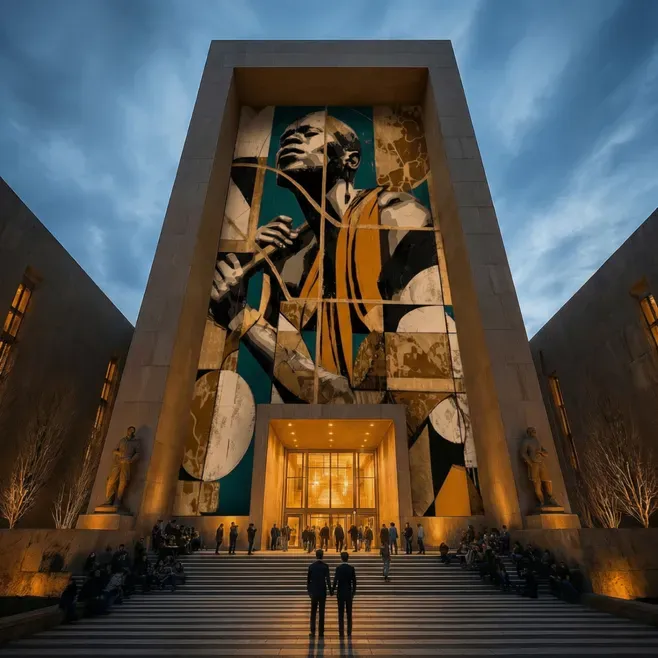
    Concept visualisation of a monumental portrait artwork integrated into a public building entrance
    Concept visualisation — a public-facing artwork conceived at the scale of architecture.

    The Context

    Election season creates attention at national scale. Attention alone is not trust.

    Conventional election media is optimised for frequency. The same portrait, slogan, and party symbol can appear across countless temporary surfaces, each placement competing with the next. The result may be visible, but it is rarely composed. In the public realm, repetition without structure quickly becomes noise.

    That visual disorder affects more than aesthetics. It makes important messages harder to distinguish, leaves little room for meaning, and reduces political presence to something temporary and disposable. Electionairing begins with a different premise: public attention should be treated as a responsibility, not simply an inventory to occupy.

    The Brief

    Turn political visibility into an ordered, durable public system.

    The brief was to create a framework that could operate across locations and campaign formats without becoming another layer of visual clutter. The system needed to balance reach with restraint, consistency with adaptability, and immediate recognition with longer-term public value.

    Instead of allowing every placement to function as an isolated advert, Electionairing proposes a coordinated media language. Strategy determines where communication belongs. Visual rules determine how it appears. Durable platforms give the work enough presence to be remembered—and enough purpose to remain relevant after the election cycle has passed.

    The Media Logic

    Architecture becomes the platform. Cultural authorship becomes the medium.

    Electionairing imagines fewer, more intentional interventions at landmark scale. Façades, entrances, and civic approaches become composed media environments, allowing imagery to work with the architecture rather than sit on top of it as temporary clutter.

    A cohesive system of scale, framing, colour, and image hierarchy connects each location to a larger visual family. The platform can adapt to different sites while preserving the order and recognition necessary for communication at city scale.

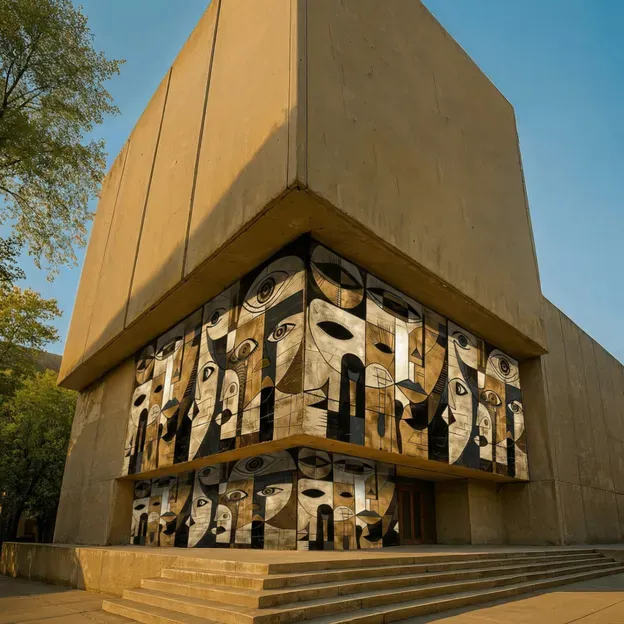
    Concept visualisation of a monochrome artwork wrapping the lower façade of a public building
    A corner study explores how one visual language can continue across multiple architectural planes.
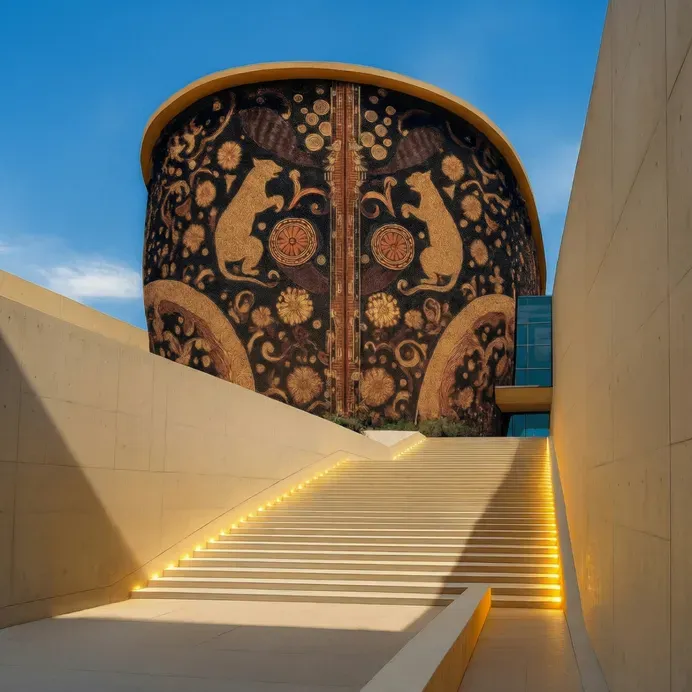
    Concept visualisation of a culturally patterned cylindrical façade reached by a broad public staircase
    The platform is conceived as a destination within the public realm, not a temporary layer applied to it.

    The Visual Language

    Recognition is built through symbols people can read and remember.

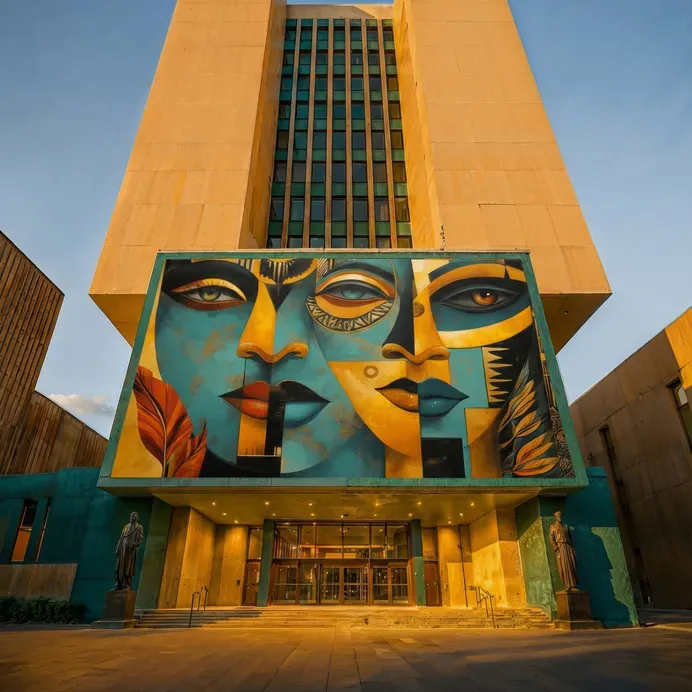
    The visual explorations centre faces, eyes, human figures, animals, and culturally coded ornament. These forms hold attention without depending on dense blocks of copy. From a distance, the composition is immediate; at closer range, pattern and symbolism give the surface greater depth.

    This balance matters in environments experienced at different speeds. A landmark must be legible in passing, yet substantial enough to reward a longer encounter. Electionairing uses art direction to move the message from simple exposure toward recognition and public memory.

    The Public Experience

    Visibility is designed as an encounter, not an interruption.

    The concept studies consider approach, sightline, scale, and illumination as part of the communication system. Artwork holds the end of a staircase, frames an entrance, or wraps a corner so that the public experiences it in movement rather than as a flat, isolated panel.

    The objective is not maximum coverage. It is stronger placement: interventions with enough spatial presence to create a moment of attention, enough clarity to communicate, and enough visual integrity to belong to the place they occupy.

    The Long View

    The election ends. The public surface should still carry value.

    Electionairing's central proposition is permanence. Campaign investment can support platforms and cultural artworks that continue to contribute to the public realm after voting ends. The immediate message belongs to a larger structure rather than becoming another piece of material to discard.

    As a concept system, Electionairing establishes a repeatable direction for media planning, visual identity, and platform development. It reframes election communication as a designed civic presence—one capable of carrying attention in the moment while building a more considered public memory over time.

    Electionairing proposes a different standard for political visibility: not more noise, but more intention; not disposable exposure, but culturally authored infrastructure. It is a system designed to give public communication clarity in the present and value beyond the campaign.

    Services

    • Media Strategy
    • Visual System Design
    • Platform Development

    Year

    2025

    Industries

    CollaborationsMedia