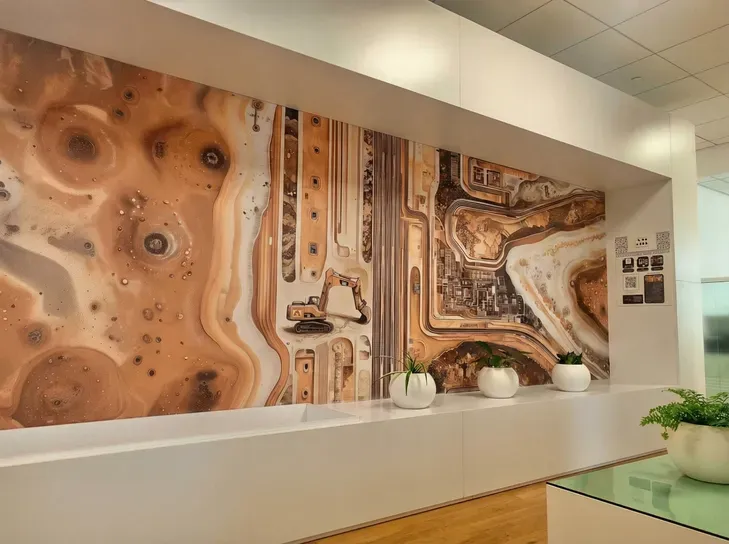
Our work with HiTech documents infrastructure as both engineering achievement and public narrative. Beginning with Blueprint of Progress in 2024 and extending into the Calabar Coastal Highway documentation in 2025, the collaboration builds a visual record of construction while it is still becoming part of the nation.
The camera is used not simply to report activity, but to establish scale, labour, material, and transformation as a coherent brand language. In that frame, roads and worksites become evidence of capability—and the archive becomes part of how the public remembers progress.
Infrastructure changes the landscape once. The archive shapes how that change is understood for years.
The Brief
Document construction with the clarity of a national story.
Large infrastructure projects produce an enormous volume of activity, yet ordinary documentation can flatten that work into disconnected updates. HiTech required a visual approach capable of holding technical intensity, human effort, and civic consequence within one recognisable narrative.
The direction needed to serve immediate communication while building a longer-term record: images and sequences strong enough for public-facing media, but disciplined enough to remain useful as an archive of the work.
Blueprint of Progress
Active construction became a brand-defining visual language.
The 2024 project focused on the raw conditions of making—machinery, structure, dust, repetition, scale, and coordinated labour. Rather than conceal the unfinished nature of the site, the visual storytelling used it as proof of process.
A consistent treatment of perspective, rhythm, and sequence allowed individual moments to accumulate into a larger impression of capability. The brand was framed through what it builds and how that work occupies the landscape.
The Coastal Highway
The visual system expanded from project scale to national scale.
The Calabar Coastal Highway documentation extended the language across a more expansive civic story. Here, route, geography, engineering, and future public use needed to be understood together.
The work frames infrastructure as cultural memory in real time: not only a technical undertaking, but a transformation citizens will later recognise as part of the country's physical history.
The Archive
A repeatable system connects present communication with future memory.
Across both projects, documentary direction and archive curation give HiTech a consistent way to present complex work. The visual record can evolve with construction while preserving the same point of view.
That continuity turns documentation into an asset of its own—one that communicates progress now and provides evidence, context, and institutional memory after the site has changed.
The HiTech collaboration treats nation-building as a story worth authoring with care. Engineering creates the infrastructure; disciplined visual documentation ensures the scale and meaning of that work are not lost.
