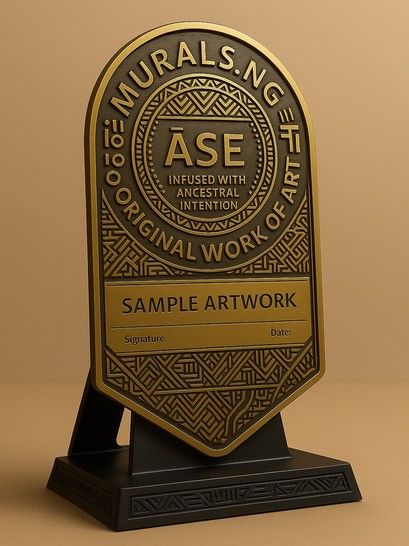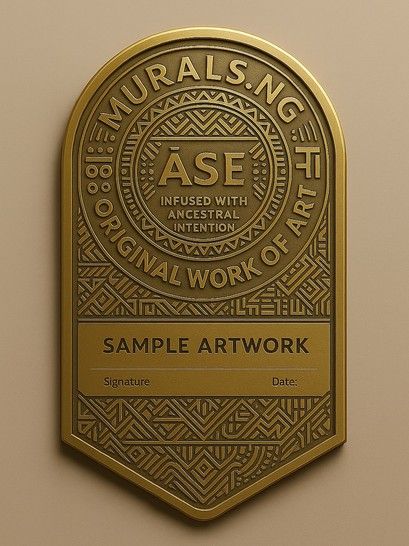
ASE was designed as a physical provenance object for premium African art. The plaque brings authorship, identification, and collector-facing information into a form that can accompany an artwork without reducing its presence to paperwork kept elsewhere.
Its role is both practical and symbolic. It creates a visible point of connection between the work, its maker, and its record, while presenting that connection through an object designed with the same attention to cultural identity and material value as the art it supports.
Provenance should not feel like administration added after acquisition. It should feel like part of the artwork's life and legacy.

The Problem
Important artworks need records that can travel with them.
As works move between artist, collector, residence, institution, and future custodian, the information around authorship and origin can become separated from the object itself. A certificate may be stored out of sight; a digital record may exist without an immediate physical reference.
ASE creates a durable bridge between those layers. It gives collectors and viewers a visible place to begin understanding the work's identity while supporting the wider documentation held around it.
The Object
Authentication language is translated into a culturally coded artifact.
The plaque uses a shield-like silhouette, bronze-toned relief, patterned borders, and a clearly ordered information field. An authentication mark and scannable interface sit within a composition designed to feel authoritative without becoming industrial or anonymous.
The physical form matters because provenance is also about confidence. Weight, finish, legibility, and presentation help the object communicate seriousness before any supporting record is opened.

The Collector Experience
The record becomes part of presentation and transfer.
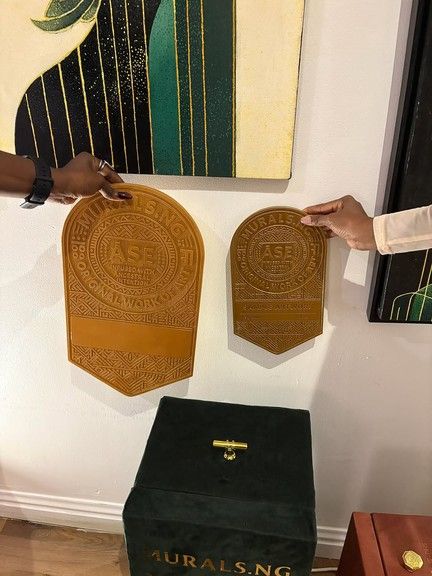
ASE is designed to accompany the artwork through acquisition, installation, and future stewardship. Its display format allows provenance to remain accessible without competing visually with the work itself.
Presented as part of the handover, the plaque gives the collector a tangible marker of authorship and a defined route into the work's supporting information. That ritual strengthens the sense that the artwork is being received as a documented cultural object.
The System
A repeatable identity supports a growing art archive.
A consistent plaque system can connect individual works across commissions, collections, and years while preserving the specificity of each record. The object becomes recognisable, but the information it carries remains unique to the work.
ASE therefore operates at two scales: as a provenance companion for one artwork and as infrastructure for a broader culture of documentation, custody, and long-term value.
ASE turns provenance into a designed encounter—giving collectors a physical object through which authorship, documentation, and stewardship can remain connected to the artwork over time.