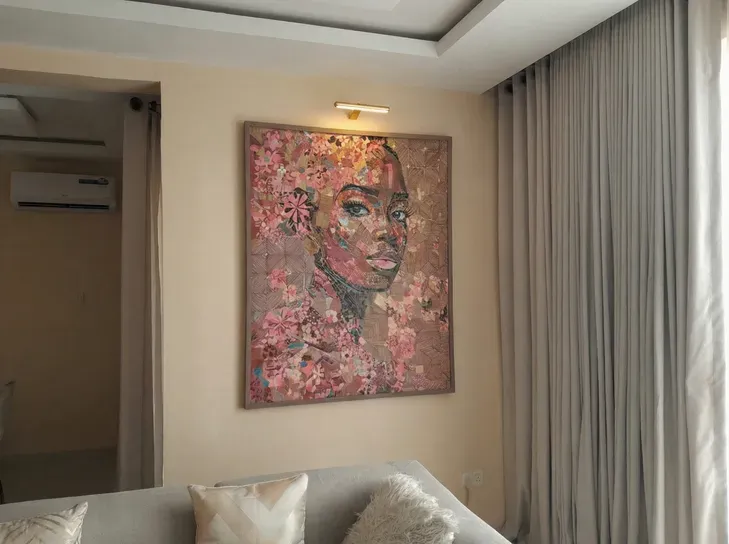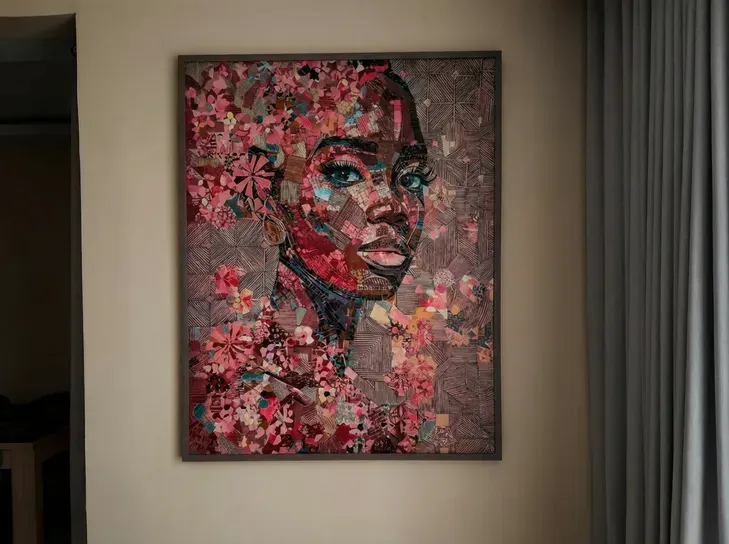
The Damis Portrait was commissioned for a private home as more than a faithful likeness. The intention was to create a work with enough presence and permanence to become part of the family's visual memory—a portrait made for the room it would inhabit and for the years beyond it.
That required attention to both the subject and the setting. Expression, colour, scale, framing, and placement were developed together so the finished piece would feel personal without becoming visually separate from the home around it.
A private portrait becomes an heirloom when it holds both a person and a sense of place.


The Commission
Capture character, not only appearance.
The creative task was to produce an image that felt intimate to the family yet assured enough to command its architectural position. Rather than treat portraiture as a photographic copy, the work focused on the qualities that make the subject recognisable: bearing, expression, warmth, and composure.
The surrounding palette was kept deliberate so attention remained on the sitter while the artwork could still sit comfortably among the home's existing materials and furnishings.
The Installation
Framing and placement completed the artwork.
A portrait's impact changes when it leaves the studio. The final scale, frame, and hanging height were considered in relation to the console, wall, and daily circulation of the room, giving the work a clear sightline without making the interior feel staged around it.
Installed in the home, the piece works at two distances: as a composed focal point across the room and as a more detailed, personal encounter up close.

The Outcome
A personal image with generational intent.
The completed commission gives the residence an unmistakably personal centre. It records a likeness, but it also carries the atmosphere of the home and the value placed on the person represented.
Created and installed as one considered object, the portrait is positioned to outlast interior trends and remain meaningful as it passes through the family.
The Damis Portrait shows how bespoke portraiture can move beyond representation to become part of a family's architecture, memory, and legacy.